
Many relationships are left behind with success: Indrajit Lankesh said – Launched Deepika, then did not try to work together.
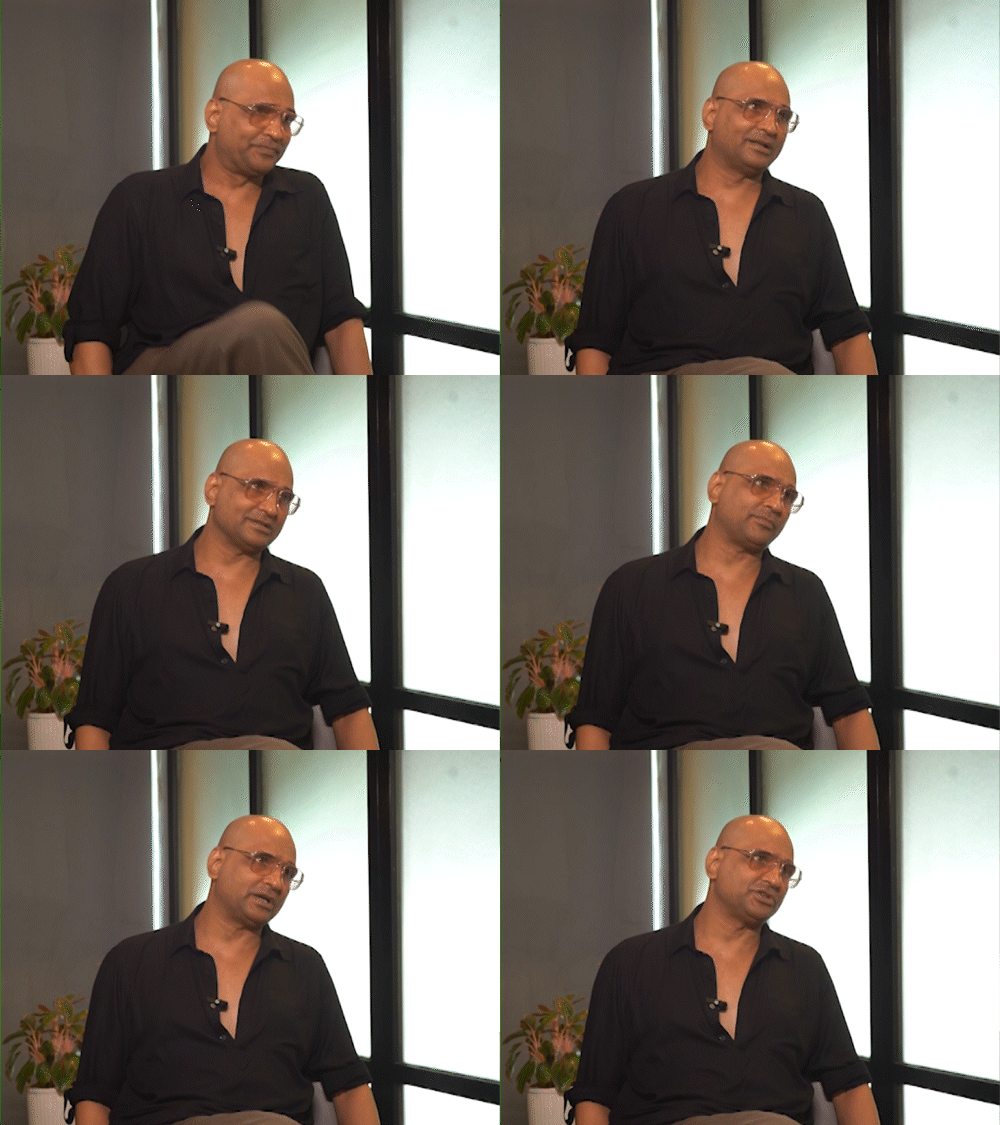
Well-known filmmaker-actor of Kannada cinema, Indrajit Lankesh is also known for his outspoken views. He gave a chance to Deepika Padukone in her first film ‘Aishwarya’ and recognized her star quality in the first meeting itself. Now he is coming with his new film ‘Jai Hind Jai Sindh’, which he considers to be the most satisfying film of his career. While talking to Dainik Bhaskar, he talked about Deepika, journalism, father P. Lankesh’s legacy and issues related to society. Question: First of all let’s talk about your new film ‘Jaihind Jaisindh’. What is this movie about? Answer: People are considering it to be just a Partition film, whereas it is not so. Partition is one layer of it. It is a contemporary love story, which shows a boy’s journey of coming of age. It has a message of love, relationships and humanity for Genji. I believe that the answer to hatred today is humanity and this is the basic idea of the film. You said that this is the most satisfying film of your career. Question: You said that this is the most satisfying film of your career. Why so? Answer: Because it is not just entertainment. This is a story in which I completely believe. I believe that cinema is not only a medium of entertainment but also a medium of communication with the society. I have tried the same through this film. Question: You launched Deepika Padukone in her first film. How was the first meeting? Answer: I knew Deepika Padukone since she used to play badminton. After a long time, we met by chance in an elevator. She was modeling at that time. His personality, confidence and screen presence impressed me at first sight. Question: Did you decide on him for the film in that very meeting? Answer: Almost yes. I was impressed after seeing them. Later we signed him for ‘Aishwarya’. I had full confidence in his talent. Question: At that time, did you have any idea that she would become such a big star? Answer: Absolutely. I believed that she would make a mark not only in Bollywood but also at the international level. He later worked in Hollywood, so my belief was proven correct. Question: How big a turning point did the success of ‘Aishwarya’ give to Deepika’s career? Answer: The film was very successful. It ran for 100 days in theatres. Deepika’s posters were put up everywhere in Bengaluru. After this the doors of Bollywood opened for him. When Shahrukh came to know about the success of ‘Aishwarya’, he jokingly said that now Deepika will have to pay more money. Later Farah Khan launched him in ‘Om Shanti Om’ and the rest is history. Question: Why didn’t you work with Deepika Padukone again after ‘Aishwarya’? Answer: Look, Deepika has achieved great heights in her career, of which I am proud. Today she is among the biggest actresses of the country and has been a part of big projects. When an artiste reaches that stage, his priorities, scope of work and team change. In such a situation, old relationships and potential collaborations are left behind. I have always respected his journey. Therefore did not contact him again for any film. I have only respect for him and am happy that I had a small contribution in the beginning of his career. Question: Your family has been identified with journalism. Then how did you come to films? Answer: My father P. Lankesh had started a small newspaper, which later became a big organization. The nature of media changed with time. Visual media, social media, PR and corporate influence have made independent journalism more difficult than ever. I felt that I could express what I believe in more effectively through films. Question: Do you think journalism has changed today? Answer: To a large extent. Many types of influences have increased on the media. I believe that the job of a journalist is not to be a supporter of any ideology, but to stand for the right thing. Journalists should ask questions to those in power, no matter which party is in power. Question: Where did you get this idea from? Answer: From my father P. Lankesh. He taught that journalists should neither be leftists nor rightists. He should just stand on the right side. Even today I follow the same idea. Question: Your sister Gauri Lankesh was also a big name in journalism. How do you view his legacy? Answer: I do not want to comment on his journalism. For me she was not just a sister but like a mother. He has a big place in my life. Question: You had openly campaigned against drugs. How did it start? Answer: I saw that school and college children in Bengaluru are falling prey to drugs. I felt that it would be wrong if I remained silent. That’s why I complained to CCB, raised my voice and also faced opposition. After this, action was taken and awareness increased, which made me happy. Question: How difficult was it to face opposition? Answer: It was quite difficult. Some people from the film industry were also against me. But if you believe in something then you should not be afraid. I did what I felt was right. Question: Do you still consider it important to speak on social issues? Answer: Absolutely. Not only journalists, every responsible citizen should raise voice on social issues. How will change come if we remain silent? Question: What would you like to say to the audience in the end? Answer: I always say what I feel from my heart. I hope that people will see ‘Jaihind Jaisindh’ not just as a film but as an emotional experience. This is closest to my heart. I think this is the best work I’ve ever done. Hopefully the audience will give it their love and support. Jai Hind.
Source link