

What you eat in your 40s may determine how your brain would function later in life | India News
NE Delhi: If you want to remember what you had for breakfast in your 80s, it might be time to pay more attention to what you eat in your 40s.A large study published in JAMA Neurology, tracking more than 1.5 lakh adults, found that healthy diets in midlife were associated with better memory and thinking ability later. Those who ate more fruits, vegetables, whole grains, and fish were less likely to report early signs of cognitive decline and performed better on cognitive tests over time.
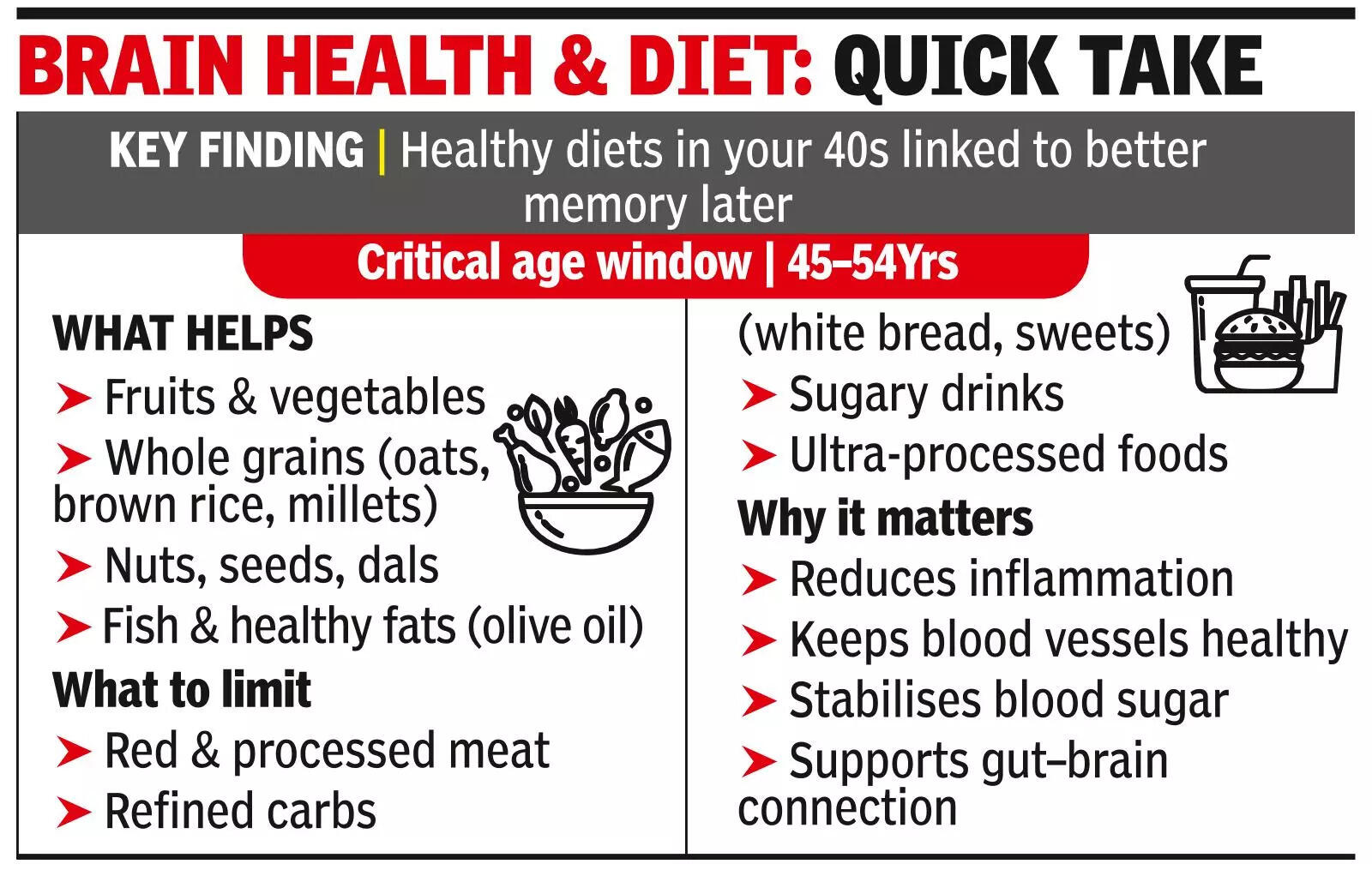
The findings put the spotlight on an important but often overlooked area of 45- to 54-year-olds, when long-term brain health appears to be forming.That’s when many risk factors—such as high blood pressure, blood sugar imbalances, inflammation and vascular damage—quietly and slowly begin to affect the brain, says Monita Gahlot, dietitian at AIIMS Delhi. “Middle life is an important window because the brain still retains enough flexibility for lifestyle changes, particularly diet, to have a meaningful impact. Habits formed at this stage help build cognitive reserve and can delay or reduce the risk of dementia,” he said.Of the diets studied, the DASH (Dietary Approach to Stop Hypertension) diet showed one of the strongest links to a lower risk of cognitive decline, reinforcing its benefits beyond heart health. Ritika Samaddar, chief clinical nutritionist at Max Super Specialty Hospital, said diet plays a direct and sustainable role in brain health throughout adulthood. “Plant-based diets rich in fruits, vegetables, whole grains, nuts, seeds and healthy fats such as olive oil and fish are important. At the same time, red and processed meat, refined carbohydrates, sugary drinks and ultra-processed foods should be reduced,” he said.He added that diet affects the brain through multiple pathways. “A healthy gut microbiome supports cognition and mood, while a poor diet increases inflammation and oxidative stress, damaging brain cells. Stable blood sugar and good vascular health are equally important for maintaining brain function,” he said.Studies have identified diets high in red and processed meat and foods associated with inflammation or increased blood sugar as linked to poorer brain outcomes.Experts say brain aging starts much earlier and prevention needs to start in midlife. For a country like India, where the incidence of dementia is expected to rise rapidly, the findings reinforce the importance of prevention.