
‘Succeeded admirably’: Amid Strait of Hormuz blockade, Congress recalls ‘Suez Canal crisis’ and VK Krishna Menon’s resloved it | India News
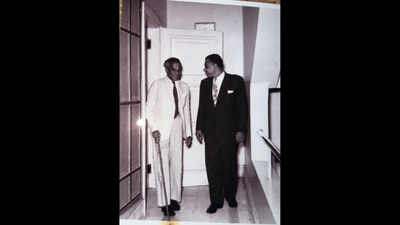
New Delhi: As the world grapples with the Strait of Hormuz crisis, Congress leader Jairam Ramesh on Tuesday drew parallels with the 1956 Suez Canal crisis, highlighting how India’s then UN envoy VK Krishna Menon played a central role in diplomatic efforts to resolve it.Menon later served as India’s Defense Minister but resigned after defeat in the 1962 China War.“The world is dealing with the Strait of Hormuz crisis. Seventy years ago, it faced the Suez crisis,” Ramesh posted on X.“On July 26, 1956, Egyptian President Nasser nationalized the Suez Canal. This created a huge furor in the West and raised war clouds. The man at the center of diplomatic efforts to resolve the crisis was none other than VK Krishna Menon. He succeeded admirably, but for a short time,” he added.Ramesh recalled that on October 29, the United Kingdom, France and Israel launched an invasion of Egypt, which had to be called off within days following the intervention of an “outraged” US President Dwight Eisenhower.“Ironically, this is the same man who three years ago authorized a joint US-UK operation to overthrow Iran’s democratically elected Prime Minister Mohammad Mossadegh, who nationalized the oil industry there,” observed the Rajya Sabha MP, referring to Eisenhower.After the end of the Egyptian invasion, UN emergency forces remained on the Sinai and Gaza borders until early June 1967. “The force, drawn from ten countries including India, was active till 1967. Its commander was Lt. Gen. PS Giani from December 1959 to January 1964, and Mazen in January 1967. Jeet Ricky led it,” he said.He also mentioned that Prime Minister Jawaharlal Nehru himself had addressed the Indian delegation in the Gaza Strip on May 20, 1960. The Six Day War immediately followed the departure of UN emergency forces.Ramesh also shared pictures of Menon with Nasser, Anthony Eden and Selwyn Lloyd during the busy diplomatic effort.These memories come as the world grapples with the Strait of Hormuz crisis. Amid fears of a global energy crisis, only a handful of ships pass through the vital waterway, through which 20% of the world’s oil normally travels. Iran’s attacks on commercial vessels have slowed shipping, sharply increased oil prices and pressured Washington to act to ease pressure on consumers and the global economy.Iran effectively blocked the waterway in retaliation for the US-Israeli attack that triggered the current Middle East crisis.