

थर्ड लैंग्वेज में फेल तो नहीं मिलेगा पास सर्टिफिकेट, CBSE क्लास 9 और 10 के छात्रों के लिए नया नियम लागू – cbse third language mandatory for 10th pass certificate coming session edmm
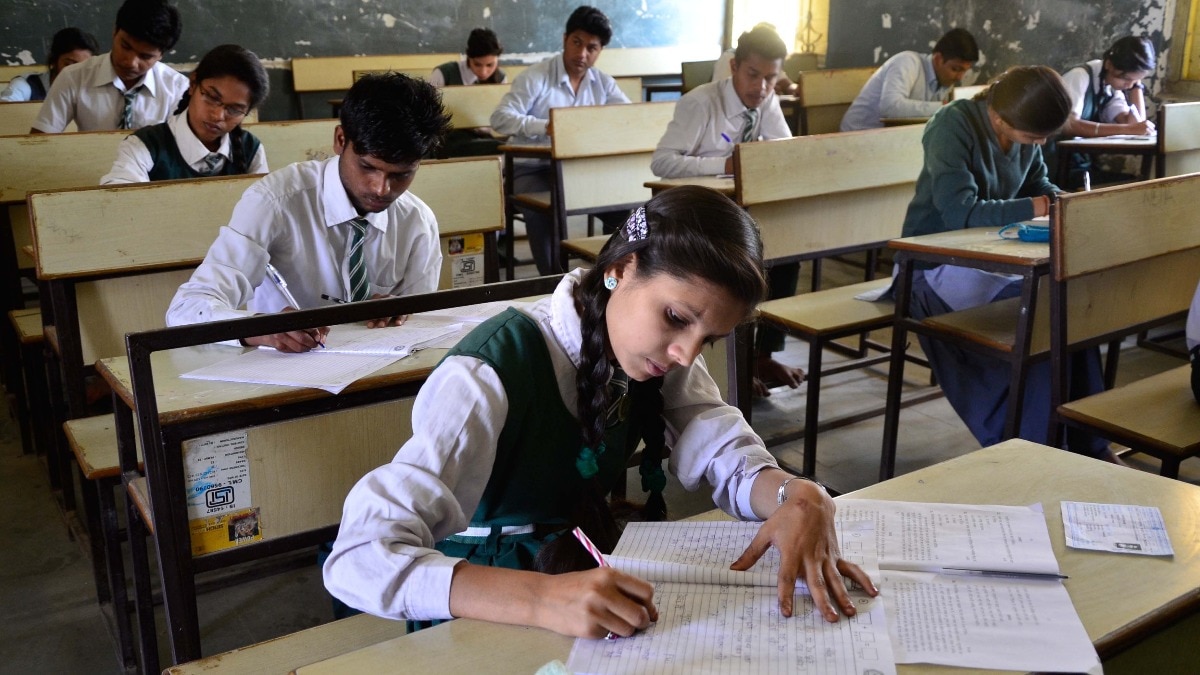
If you or your children are studying from Central Board of Secondary Education (CBSE), then this news is very important for you. CBSE has made a major change under the National Education Policy (NEP) 2020. Now it has been made mandatory for students of classes 9 and 10 to pass the internal assessment of third language.
From the academic session 2027-28, students will have to clear this assessment conducted at the school level to get the 10th pass certificate.
Now ‘third language’ is necessary to pass 10th board
According to the circular issued by CBSE on July 10, students who will enter class 10th in the academic year 2027-28 will have to clear the school-based internal assessment of their third language (referred to as R3). Without this they will not be given Secondary School Examination Pass Certificate (10th Pass Certificate).
Not part of board exam, but necessary to pass
It is a matter of relief that there will be no written board examination for the third language. This will be completely based on the internal assessment of the school. But, if a student fails in this internal assessment, the school will have to re-assess him before the final board result is declared.
A big screw is still stuck…
CBSE has not yet made it clear in its circular that what will happen if a student fails in this re-assessment to be held before the final board result of 10th? Will the board withhold his result, give him a provisional certificate or conduct the examination again? The situation remains to be clarified on this.
Class 9 students will get another chance
Some relaxation has been given in the circular for class 9th students. Even if a student fails in the internal assessment of third language in class 9, he will be promoted to class 10 (session 2027-28). However, he will have to clear this pending assessment of his 9th class while studying in 10th. This will not spoil the student’s year, but he will have to clear this backlog before passing 10th.
This new rule will be applicable to those students who will enter class 9 in the academic session 2026-27 and class 10 in 2027-28.
‘Three-language formula’ is applicable from class 6 onwards
Earlier, CBSE had issued a circular on June 29 stating that the ‘Three-Language Formula’ (rule of three languages) will be implemented from Class 6 from the academic session 2026-27. According to the rules, students will have to study three languages, out of which at least two languages should be Indian (Native to India).
What will happen to those speaking foreign languages? Students of classes 7, 8 and 9 who have already chosen a foreign language along with English can continue it. But, along with this they will also have to learn a third Indian language.
What was the rule earlier? Generally students used to leave the study of third language after 8th. Now it has been made mandatory to study in class 9th (from session 2026-27) and 10th (from session 2027-28).
Case reached court: Government gave this argument
This new language rule of CBSE has also been challenged in the court. The petitioners have demanded that CBSE should keep its old decision of April 9 in force, under which the decision to make the third language compulsory in class 9 was postponed till the year 2029-30.
On this, Education Ministry’s Under Secretary Subhash Chand has clarified the government’s stand by filing a 9-page affidavit in the Supreme Court on July 13. The government has argued that education comes in the concurrent list of the Constitution, hence both the Center and the state have full right to implement the National Education Policy (NEP).
The government believes that the ‘three-language formula’ will promote multilingualism among children, preserve Indian languages, strengthen the mental development of children and promote cultural diversity and national unity in the country. With this new step of CBSE, the importance of school-based assessment has increased significantly. However, all eyes are now on the stand of the court and its implementation at the ground level.
—- End —-