
तीस्ता रिवर प्रोजेक्ट पर चीन-बांग्लादेश की बातचीत से भारत अलर्ट, ‘चिकन नेक’ के लिए क्या खतरे? – Teesta River Bangladesh PM Tariq Rahman Visits China Concerning For India mnrd
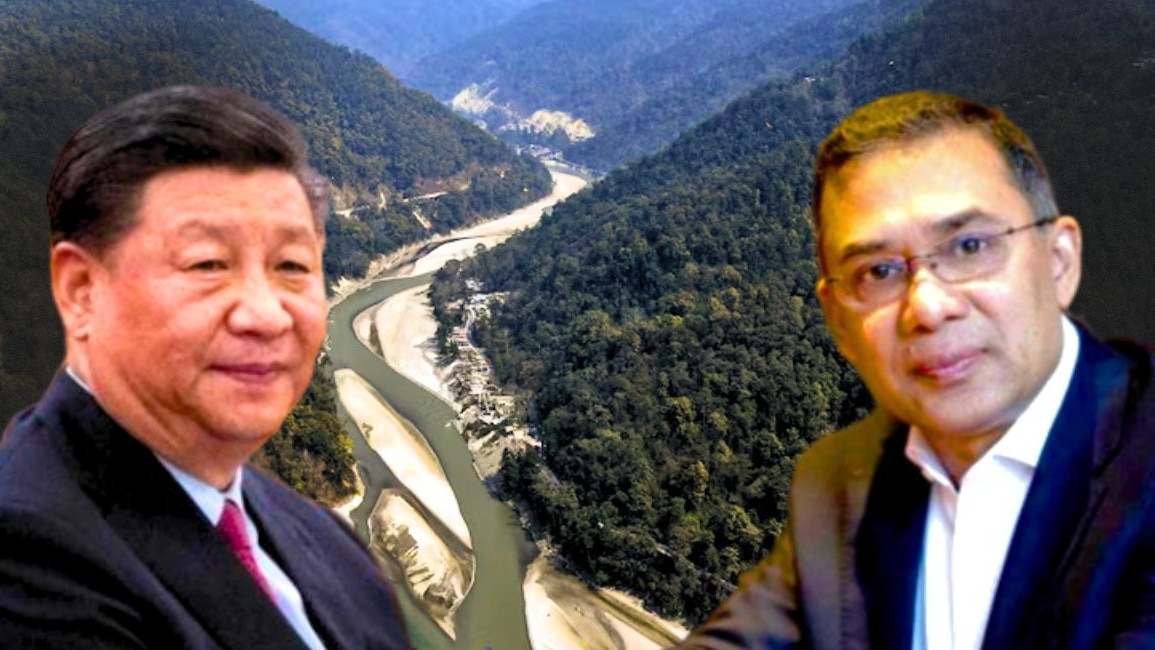
A river has suddenly become a point of strategic debate between India, China and Bangladesh. This is Teesta river. The same Teesta, which originates from the Himalayas, passes through Sikkim and West Bengal and reaches Bangladesh. In the last few days, this issue came into discussion because Bangladesh Prime Minister Tariq Rahman has sought help from China in the Teesta River Comprehensive Management and Restoration Project.
This project of about one billion dollars has been officially created for river cleaning, dredging, flood control, irrigation and local development.
Also read: America’s ‘black hole’… where leaders who clash with Israel meet their end
But in India this news is not being seen as just a water project. For Indian security experts, this matter is directly related to the area which is considered the most sensitive point of the country’s security – Siliguri Corridor. This is the reason why the increasing closeness between China and Bangladesh regarding the Teesta project can create concern in India.
First understand what is Teesta Project?
Bangladesh has been planning the restoration of Teesta river for many years. Dredging of the river in about 102 km long stretch, construction of embankments, flood control, irrigation network and agricultural improvements are part of this plan. Bangladesh argues that the problems of both floods and water crisis arise every year in the northern districts. Therefore, river management is a big development issue for him.
For this reason, Dhaka has demanded technology and funds from China. China has also shown its interest in this project for a long time and it is seen to be linked to the larger framework of the Belt and Road Initiative (BRI). On the surface, there seems to be nothing unusual in this. But the real story is hidden in the map.
Why is Siliguri Corridor important?
If you look at the map of India, you will see a very narrow area in the northern part of West Bengal. This is Siliguri Corridor. It is also called “chicken neck”. It is a land area about 20 to 22 kilometers wide and about 60 kilometers long. But its importance does not lie in its breadth, but in its role.
The eight northeastern states of India, Assam, Arunachal Pradesh, Manipur, Mizoram, Nagaland, Tripura, Meghalaya and Sikkim, are especially connected to India through this route. Railway lines. National Highway. Petroleum supply. Fiber Optic Network. Military logistics. Almost everything passes through this corridor. If this route gets disrupted during any war or major crisis, the connectivity of North-East India with the mainland could be seriously affected. Therefore, the Indian Army has been considering it as one of the most sensitive strategic areas of the country for decades.
India’s real concern is China or the river project?
India’s real concern is China’s presence more than the river. The border dispute between India and China is not a new matter. Doklam crisis. Violent clash of Galwan. Controversy regarding Arunachal Pradesh. All these incidents have deepened the dispute between the two countries. In such a situation, the question of India’s strategic experts is why China is showing so much interest in the Teesta project.
Also read: Cheating in the name of friendship? Is Trump’s ‘G2’ alliance an alarm bell for India?
If China invests in this project, its engineers, technical experts, survey teams will all reach this area and they will be very close to India’s infrastructure network and most sensitive geological points. This is where India’s security concerns begin.
What is the fear of “dual use infrastructure”?
In today’s geopolitics, every road, bridge or port is not considered just a development project. Sometimes the same projects can also be put to strategic use. This is called “dual use infrastructure”. Indian security experts argue that under the pretext of Teesta project, China can get detailed geological information of that area.
If China gets this project then Chinese engineers will survey the river. Will survey the ground area. During this time, all the information like communication network, transportation routes, local infrastructure can also have military importance. India fears that with a long-term presence, China will be able to understand the strategic picture of the entire region in a better way.
Is China trying to surround India from all sides?
Many strategic analysts in India see it as a larger strategy of “String of Pearls” and regional encirclement. In the north, China is already present in Tibet and Chumbi Valley. It has a close military and economic alliance with Pakistan in the west. China has increased its presence in the Indian Ocean through ports and maritime projects.
Hambantota Port of Sri Lanka. Gwadar Port of Pakistan. India views matters like Chinese investment in Myanmar as China’s strategy. Now, if China establishes a major presence in the northern part of Bangladesh, then some experts in India see it as a situation of increasing pressure from both the north and the south.
What lesson was learned from Doklam?
India has not yet forgotten the Doklam crisis of 2017. Then China started road construction in Doklam area of Bhutan. India feared that if China strengthened its position there, its pressure on the Siliguri Corridor might increase. Doklam (or Zhonglan or Donglong) is a disputed area between China and Bhutan. This is a valley area which is on the Bhutan-China border near Chicken Neck of India.
Indian and Chinese soldiers stood face to face for about 73 days. Eventually the tension subsided, but that incident reminded India how sensitive the Siliguri corridor is. Now the Teesta project is raising a new question about the possible presence of China near the southern part of the same region.
What could be the biggest danger in a war-like situation?
This is the same question which is of greatest concern to Indian security analysts. Suppose a major military tension arises between India and China in the future. In such a situation, China can use its military positions in Tibet and Chumbi Valley in the north. At the same time, if Chinese influence or infrastructure is present within Bangladesh in the south, then the strategic pressure on India may increase further.
Also read: Iran got jackpot after the war! Know the inside story of 300 billion dollar fund
Experts say that in any war it is not necessary that roads or railways be completely destroyed. Sometimes even a disruption of just a few days can have major military and economic implications. This is the reason why India does not look at any development related to Siliguri Corridor only from the economic perspective.
Does Bangladesh understand India’s concerns?
Bangladesh’s official stand on this is completely different. Bangladesh says that this project is completely related to development and water management. For him, Teesta river is a question of the lives of millions of people. From the water of this river to agriculture, irrigation, drinking water, all these issues are directly related to this project. Bangladeshi officials say that the process of technical investigation and verification will be completed before final approval. But many experts in India believe that Dhaka should also keep India’s security concerns in mind.
Did India itself give this opportunity to China?
There is another side to this debate also. Teesta Water Treaty has been stuck between India and Bangladesh for years. The controversy behind this was regarding the politics of West Bengal and distribution of river water. Bangladesh has been demanding a solution to this issue for a long time. Some experts believe that if the Teesta Agreement had been signed between India and Bangladesh earlier, perhaps China would not have got such a big opportunity.
Interestingly, after the recent political changes, new equations have been formed in the politics of West Bengal. This has started the discussion about the possibility of new talks on the Teesta issue in future. For example, former CM Mamata Banerjee has been opposing this treaty. But the way for further talks with India regarding treaties and projects can open only when Tariq Rehman visits India. After becoming the Prime Minister, he has not been able to visit India yet and he has gone on a tour of China. Now it remains to be seen what stance China takes regarding Tariq Rehman’s proposal, from which India can decide its future strategy.
—- End —-