

80% Indians cleared by tests are struck by heart attack | India News


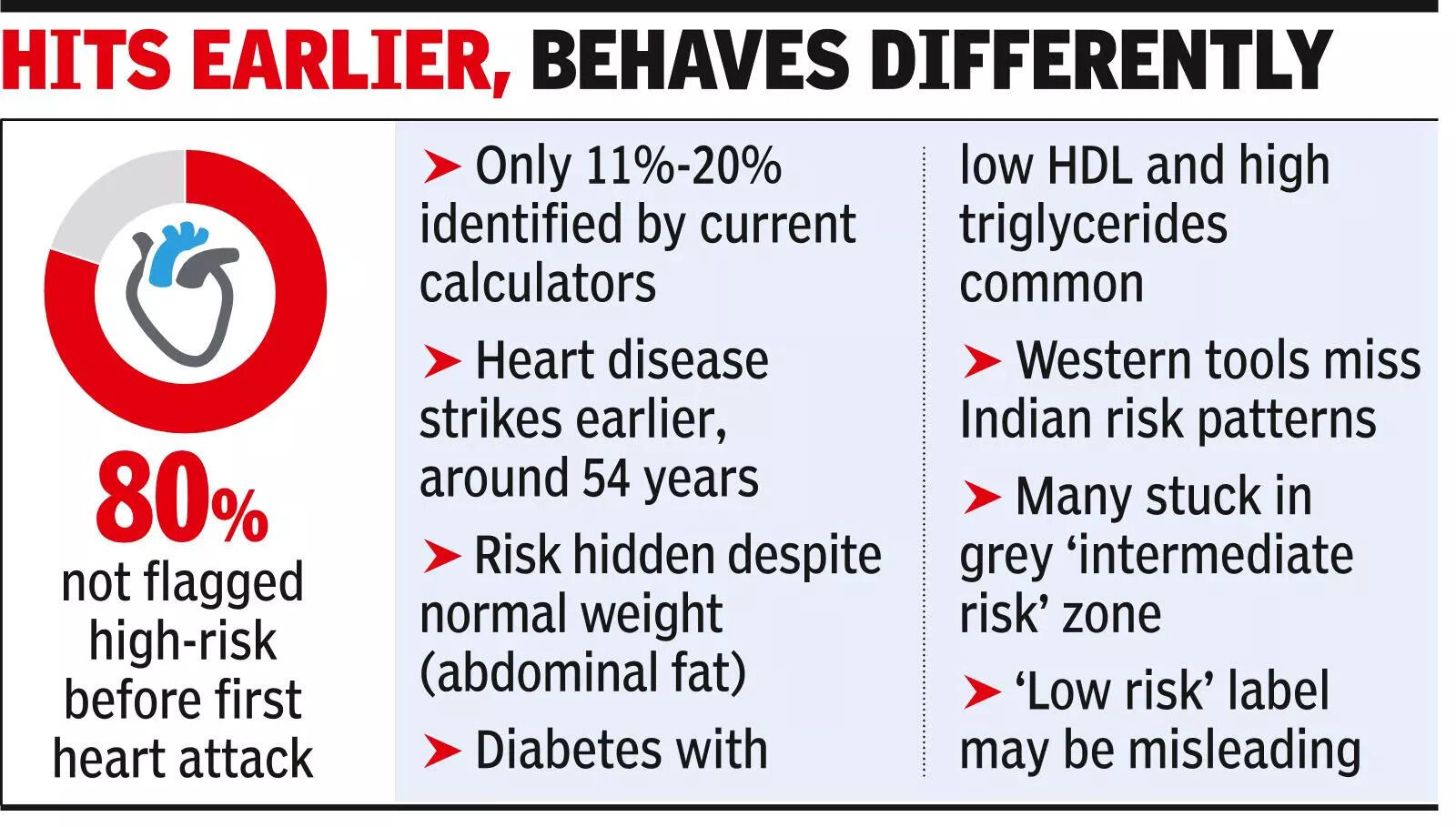
NEW DELHI: He had no red flags. No “high risk” tag. By standard medical calculators, he wasn’t the type of patient doctors worried about. Then the heart attack happened – suddenly and without warning. Doctors say, it is not unusual anymore. A major Indian study suggests that this may be the norm.In a retrospective analysis of more than 5,000 Indian patients, widely used global heart risk calculators failed to identify most people at risk, with nearly 80% of those who suffered a first heart attack not previously identified as high-risk. The researchers, led by Dr. Mohit Dayal Gupta of GB Pant Hospital in Delhi, say Western models miss India-specific risk patterns, often placing patients in the low or moderate category despite the inherent danger.These models are used by doctors to determine who needs treatment, but studies have shown that they often misclassify risk and sometimes produce conflicting results. Across models, only 11%–20% of patients were labeled high-risk, although all eventually had a heart attack.“Indian patients and populations behave completely differently. We have different risk factors, different patterns and so Western scores may not always be appropriate,” says Dr Gupta.
‘80% of first heart attacks in people not labeled high-risk’
A mismatch is at the root of the problem. Most of these risk calculators were designed using Western populations, where heart disease tends to occur later. In India, it strikes earlier and behaves differently — studies have shown that the average age of patients is only 54, which shows how premature heart disease has become.Researchers say Indians show a distinct “South Asian phenotype”. Heart risk appears earlier, often with diabetes and insulin resistance, even at normal body weight. Cholesterol patterns are confusing — low HDL and high triglycerides, while LDL may not be very high. Many also have hidden abdominal fat despite appearing lean, which is a risk BMI-based assessment misses. Smoking and psychosocial stress, along with traditional risk factors such as diabetes, smoking, and dyslipidemia, exacerbate this hidden burden.This is why Western risk scores underperform. They rely heavily on age and LDL cholesterol, leading to underestimation of younger Indians. As a result, many patients fall into an “intermediate risk” category—a gray area that often delays preventive treatment. Importantly, these models ignore key drivers such as insulin resistance, lipoprotein(a), ApoB, central obesity and chronic kidney disease.The effect is significant. These scores determine who gets preventative medicine and close monitoring. When risk is underestimated, intervention often comes only after a major incident.The findings have renewed calls for customized risk scores, as the Indian population is poorly represented in global datasets. Until such tools are developed, risk calculators should be used alongside clinical judgment, including family history, diabetes, psychosocial stressors and early screening, experts say.