
India, Nepal & a shifting security landscape | India News
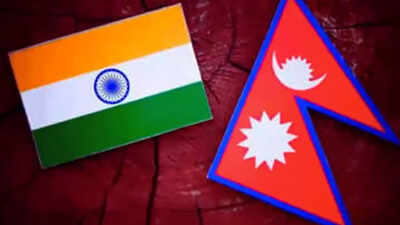
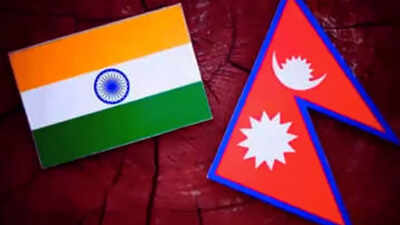
Nepal has always been more than a neighbor of India. It was a shoulder along our northern edge – where no threat was felt, whose people mingled freely with us, whose temples we prayed fervently, whose Gorkhas came to define valor. A long-standing narrative of roti-beti – sharing bread and blood lines – defines how India understands and manages its relationship with Nepal. Open borders, nurtured on the basis of cultural homogeneity and civilizational kinship, were regarded less as a policy choice and more as a natural state. For decades, this belief-based narrative has held.Since then it has undergone several sharp mutations. And India has been slow to adjust and reorder. The same open border that became a symbol of trust became a corridor for threats India could not ignore. ISI-backed networks systematically exploited the border — Lashkar-e-Taiba and Jaish-e-Mohammed modules used Nepal as a staging ground and transit zone. Fundamentalism, quietly financed through foreign channels, creates institutional footprints. An organized syndicate has developed for counterfeit currency, drug and human trafficking that operates with impunity. Even bad money changed hands for election funds.India’s response has evolved over time — civil police, then central armed police and finally smart border management. The move was necessary. But it made the relationship stronger. The warm narrative of shared identity has given way to a chilling question: How close should one be?While India was tightening its border posture, China was making strategic investments in Nepal’s human and physical terrain. The Chinese study centers on the seeds of cultural influence. Infrastructure investment specifically targeted development-arid regions where India promised much and delivered little — projects announced with fanfare, then delayed by poorly defined timelines and chronic delivery shortfalls.China has built roads and links. India sent greetings and postponements, films and fanfare.The results were predictable. Nepal’s political landscape is severely fractured. The monarchy faced a complete disaster. Maoists came to power. Political instability became a permanent condition of governance in Kathmandu. Meanwhile, India continues to operate through the backroom operations of Nepali power groups – a practice that reflects a profound strategic miscalculation. China cannot balance at the level of a small country sandwiched between two large countries. China must be balanced at China level.India has long ignored this basic fact. Until 2015, that changed everything. About 80% of Nepal’s population lives on 20% of its land – the southern Terai belt adjacent to the Indian border. These demographic and geographic realities have always made the relationship structurally sensitive. After the devastating earthquake of 2015, Nepal was at its most vulnerable. At this point the Madhesi community—Nepali citizens of the southern Terai belt who share deep ethnic and cultural ties with communities across the Indian border—launched a trade blockade against Kathmandu, protesting what they saw as their marginalization in Nepal’s newly drafted constitution. Blockades choke off the flow of essential supplies to already damaged countries. India, perceived to be insufficiently pressuring the Madhesi groups to withdraw, found itself indifferent to Nepal’s plight. Whether that perception was justified or not, it is difficult to conclude either way. What is clear is that India was characterized as non-humanitarian at the very moment when the humanitarian position was most important. It was an image that India struggled to recover.The episode exposed a deeper problem: India had invested in narratives of a relationship based on civilizational solidarity, while ignoring the material conditions that gave the narratives their credibility. We have nurtured corruption on our own soil, indulged in mere patchwork aid, and allowed delivery shortfalls to accumulate – even as China invested smartly in infrastructure, mobility and connectivity. We remain embedded in faith-based narratives even after the ground has shifted beneath them.Gen-Z ambitions exploded first in Bangladesh and then in Nepal. The demand was consistent: corruption-free, transparent, accountable governance. The pressures driving it were equally consistent – pressure on agriculture, lack of jobs, lack of growth opportunities, unplanned and unfettered urbanization and the challenges of climate change. Taken together, these suffocate a generation that is well-connected globally and frustrated locally.India missed this change. The religious-civilizational narrative, which once served as a soft anchor in Nepal, is outright rejected by this group. We also missed a time-tested wisdom: when the son grows up to stand on equal footing with the father, the proper response is to give him dignity, space, and the freedom to choose his own path. Forcing an old narrative on a changing generation breeds resentment, not affinity.Amidst China’s despicable trap diplomacy and the call of this new generation, India continues to argue from premises that no longer match ground realities.The geopolitical environment is highly dynamic, fraught with multiple conflicts and increasingly unconventional patterns of statecraft. New narratives have emerged globally — cognitive control, balance of power through balance of payments, hybrid pressure zones. China has become a deep-state actor in Nepal, also bringing Pakistan and Bangladesh closer to its orbit through multi-mode mobility, digital encirclement and high-tech surveillance. India’s neighborhood is a reality.Against this backdrop, a fundamental principle reasserts itself: all wars eventually end in peace. Wise nations have always opted for diplomacy and negotiation over prolonged unrest. Cooperation and mutual respect are the only sustainable foundations of long-term relationships. Even the claimants of the Buddha’s tradition have moved away from this middle path—but the principle remains.India must now act on an urgent basis. The 1950 agreement between India and Nepal needs to be renegotiated – reached through close, confident negotiations at the table, not through public disclosure of antiquated baseline maps that harden positions and invite conflict rather than resolve it.Nepal’s new prime minister carries a mandate for corruption-free, transparent and accountable governance. This is a real opening, and India must meet it with sincerity and commitment – not manipulation, not patchwork assistance, not backroom manipulation by power groups.On the ground, this means vibrant rural programs at the border, mutual growth pathways, various institutional linkages, startup linkages, and promotion of industrial clusters that create the right environment for workable relationships to take root. Powerful, silent communication flows naturally when Vasudhaiva Kutumbakam is employed — above fear mentality and religious rigidity — and when unquestioning democratic governance backs the words.If we draw big lines in front of other stakeholders in the system, they too will adjust their posture. The work does not match what China is doing. It must be overcome — in the sincerity, delivery and respect we extend to a neighbor whose sovereignty and dignity are non-negotiable.The wind is blowing. The question is whether India will read it in time.(The author is former DG, CRPF)