


Tar Balls: Centre proposes rules to manage environmentally hazardous tar balls, space tech to be used for surveillance and detection of oil-spills | India News
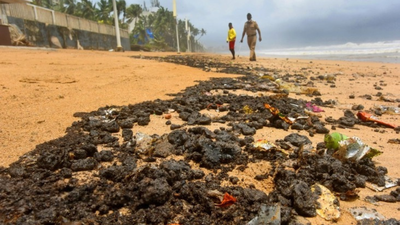
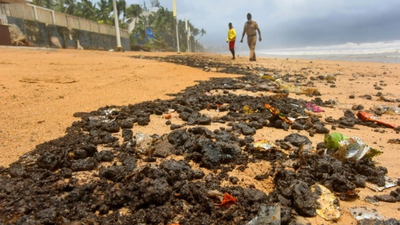
NEW DELHI: The Center has for the first time come up with dedicated rules to manage tar balls – products of oil spills caused by offshore oil exploration activities, oil tanker/ship/vessel accidents or pipeline leaks due to marine pollution – and proposed mandatory provisions for oil facility owners for its collection, environmentally friendly transportation and environmentally safe disposal.Tar balls cause marine pollution both onshore and off-shore, threatening the existence of shorebirds, sea turtles and marine life. Tar balls invariably affect the beaches of Maharashtra, Goa, Gujarat and Karnataka as they are washed ashore by strong winds and currents, especially during monsoons.The Environment Ministry, which issued a draft rule in this regard last week, provides for penalties (environmental compensation) for defaulting ‘oil facility owners’ on the polluter pay policy and assigns specific responsibilities to state governments, the Ministry of Petroleum and Natural Gas, CPCB and Environment Management. tell me‘Oil facility owner’ in the rules describes the person or entity who owns or controls or operates a facility/vessel/vessel where oil (crude or fuel or both) is extracted, explored, used, transported or handled.Notifying the draft rules known as Tar-Ball Management Rules, 2026, the ministry has sought comments/suggestions from stakeholders on the proposal within the next 60 days. The final rules, if any, will be communicated after examining the suggestions. “They (rules) will come into force after one year from the date of publication of the final notification in the official gazette,” the ministry said in its draft proposal.Underscoring the penalty provision, it said, “Where an oil facility owner fails to manage oil in an environmentally sound manner and may cause harm, damage or injury to the environment or public health, including the formation of tar balls, it shall be liable to pay environmental compensation which may be equivalent to such loss, damage or injury and shall be liable for compensation or compensation by the district administration.”“Assigning responsibility to the Indian Coast Guard, the rules specify that the Ministry of Defense agency shall implement the National Oil Spill Disaster Contingency Plan (NOS-DCP) to effectively manage oil spills and manage tar ball formation.“The Indian Coast Guard shall conduct regular air and surface surveillance for oil spills in the Indian EEZ and inform relevant stakeholders for necessary preparedness and response measures,” the draft rules said.In addition, the National Remote Sensing Agency will conduct surveillance and detection of oil-spill incidents and tar ball hot-spots by satellite, aerial, drone, sensor-equipped buoys or any other means and assist combat agencies.As per the rules, the Ministry of Petroleum and Natural Gas has to provide quarterly reports of oil spills or spills from its offshore installations to the Indian Coast Guard, the nearest coastal state government, the concerned State Pollution Control Board and the CPCB of each installation (up to 500 meters).“The Ministry of Petroleum and Natural Gas shall take all preventive measures to control oil spillage from offshore oil exploration installations/facilities,” the draft notification said.