


Oxford Ashmolean Museum: Oxford museum set to return 500-year-old bronze statue taken from Tamil Nadu temple | India News
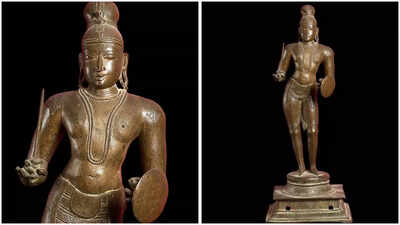
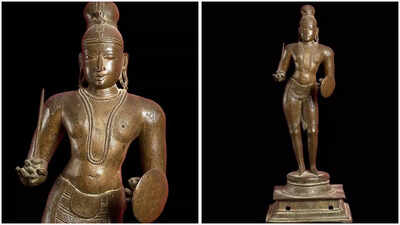
A 16th-century bronze statue of Saint Thirumankai Alvar from a temple in Tamil Nadu, among several Indian heritage items being repatriated from the UK to India.The Ashmolean Museum in Oxford acquired the 57.5 cm tall statue of the South Indian Hindu saint in 1967 in good faith and put it on display. According to Sotheby’s, it was sold to the museum by a private collector, Dr. JR Belmont (1886-1981). There is no information on how it entered his collection.However, in November 2019, a French scholar alerted the Oxford University Museum to research indicating that a bronze image was taken in 1957 at the Soundararajaperumal temple in Thadikumbu, a village in Tamil Nadu. This made the museum aware that its origins were unclear, so the museum decided to investigate.Although no formal claim was made, the Ashmolean wrote to the Indian High Commission on 16 December 2019, requesting more information and indicating the museum’s willingness to discuss its possible return.On 11 February 2020, a temple executive filed a police report stating that a modern replica had replaced the original bronze. The Indian High Commissioner then made a formal demand for the return of the bronze on 3 March 2020.At the request of the Archaeological Survey of India (ASI), the museum analyzed the bronze metal and submitted the results for a report on its provenance.Dr Xa Sturgis, director of the Ashmolean, said: “The Ashmolean is delighted to see this important object returned to India and we are grateful to the Indian authorities and scholars who helped establish its provenance. The Museum and the University of Oxford are committed to ethical collecting practices and continuing research into our collections, their origins and history.”