


No plan for monkey sterilisation, says J&K govt amid outrage over massive crop damage | India News
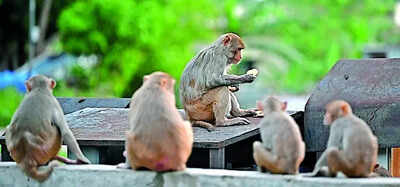
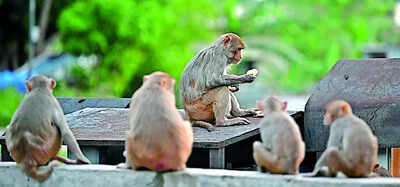
Jammu: Amid furor over monkey menace destroying crops, the Jammu and Kashmir government on Tuesday told the Assembly that it does not plan to launch a sterilization drive to curb the simian population, although it admitted that the menace remains a major headache across the Jammu region.The government, however, said various steps were being taken to tackle the problem, from pushing farmers to monkey-resistant crops like turmeric, ginger and lemongrass to promoting the planting of ladyfinger borders. Farmers are also encouraged to install solar fences, use monkey-repellent devices and stop feeding animals, the government said.BJP’s Nagrota MLA Debyani Rana raised the issue in the Assembly, saying the monkeys were destroying crops in her constituency and posing a growing threat to public safety. He pushed for sterilization, relocation, reparations and serious preventive interventions.Rana said that crop diversification can be a sound agricultural strategy, but without institutional support farmers cannot be expected to absorb the transition costs.“International and domestic experiences suggest that sterilization must be large-scale, continuous and professionally monitored to produce a measurable population impact. Sporadic interventions yield negligible results,” he added.Official statistics show that in Nagrota alone, about 2,200 hectares of agricultural land, including fruit orchards, have been affected by monkey-related crop damage.BJP MLA from Udhampur West, Pawan Gupta has warned that failure to introduce the monkey sterilization program will create a dire situation in Jammu. “Thousands of kanals of land in my constituency lie vacant because farmers are afraid to grow crops because of monkeys. Even at my own home in Udhampur, 40 to 50 monkeys gather every evening,” Gupta said.“It is said that animals sleep in the evening, but these monkeys do not. They have to go back to the forests,” he said, adding that the government’s inaction would force many more farmers to abandon agriculture.