

India-Africa ties enter new strategic phase: ‘South–South cooperation’ and multi-sector partnership in focus | India News
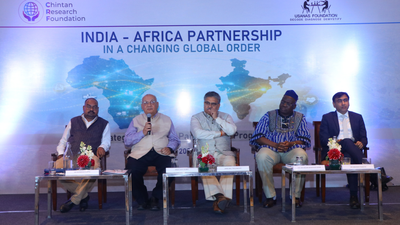
A conference on ‘India-Africa Partnership in a Changing Global Order’ was held in the national capital on Monday, where speakers highlighted that the relationship between the two regions is entering a more strategic phase.Addressing the gathering, Ministry of External Affairs Secretary (Economic Relations) Sudhakar Dalela said, “The turbulent times we live in, with supply chain disruptions, call for South-South cooperation on energy transition and climate action.” He emphasized the importance of Africa in India’s economic diplomacy and reiterated that the partnership reflects the principle of “Vasudhaiva Kutumbakam”.Speakers at the conference noted that intensifying global competition and Africa’s own integration efforts, particularly through the African Continental Free Trade Area, are transforming engagement structures. India-Africa trade has already crossed $100 billion in 2024-25 and both sides are aiming to double it to $200 billion by 2030, stressing the need for a clearer and more integrated policy roadmap.
South African High Commissioner to India, Anil Suklal, emphasized cooperation in agricultural innovation, food security, efficiency and capacity building as priorities for the next India-Africa Forum summit. Ambassador Anil Wadhawa said cooperation in technology, ports and infrastructure is “co-architecting the future in a changing global order.”Delegates pointed to opportunities in renewable energy, critical minerals and digitization, calling for stronger institutional mechanisms and regular summits. Overall, participants concluded that India-Africa relations have evolved into a multidimensional partnership but still require sustained policy attention to realize their full potential.The conference was organized by the Chinton Research Foundation in collaboration with the USANAS Foundation and brought together diplomats, policymakers and scholars to assess the trajectory of bilateral relations. Discussions highlight how historical solidarity rooted in anti-colonial struggles and the legacy of the Bandung Conference are now intersecting with contemporary developmental and strategic priorities.