

Director Sudipto Sen received threats: Told why he is not included in The Kerala Story Part 2, returned from ‘Charak’, will bring Hathras incident to the fore
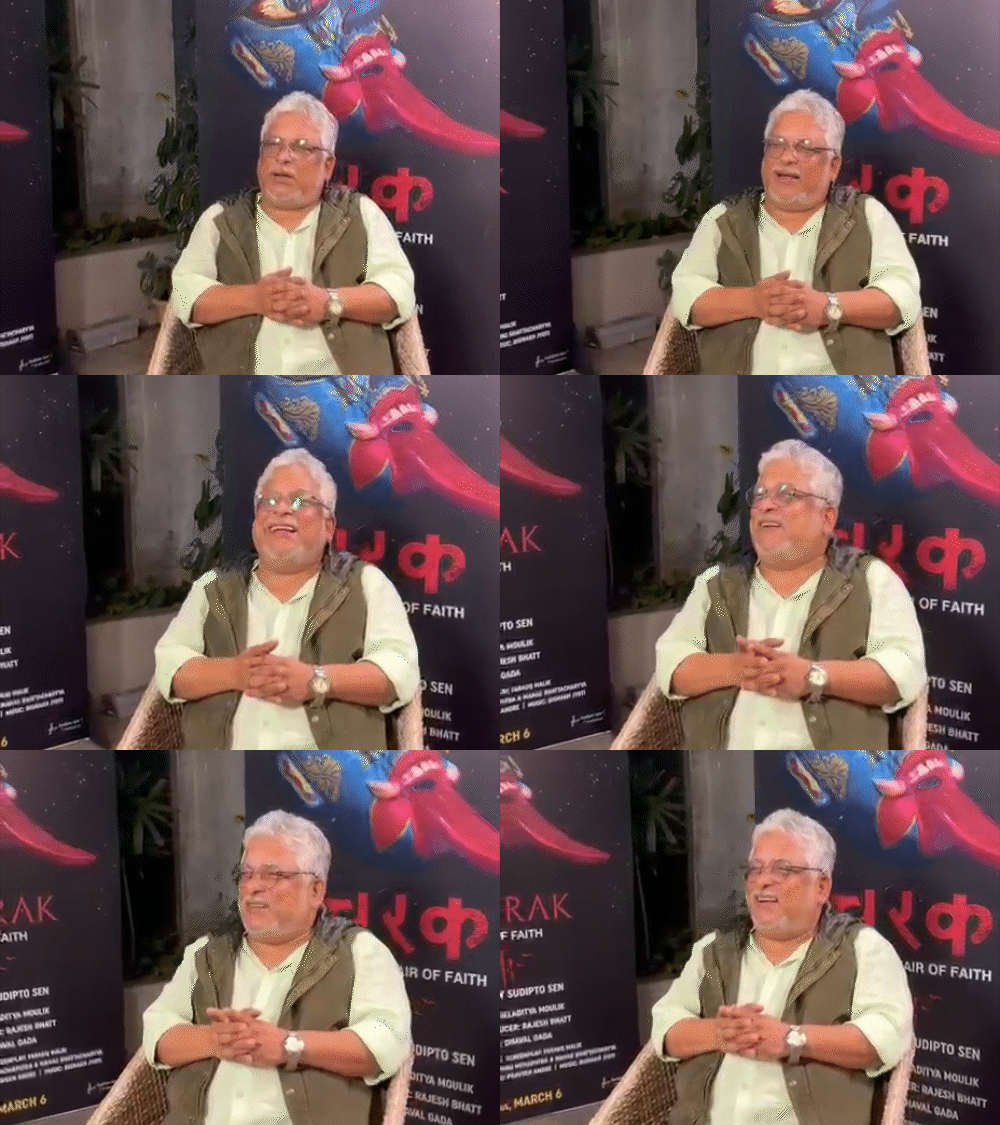
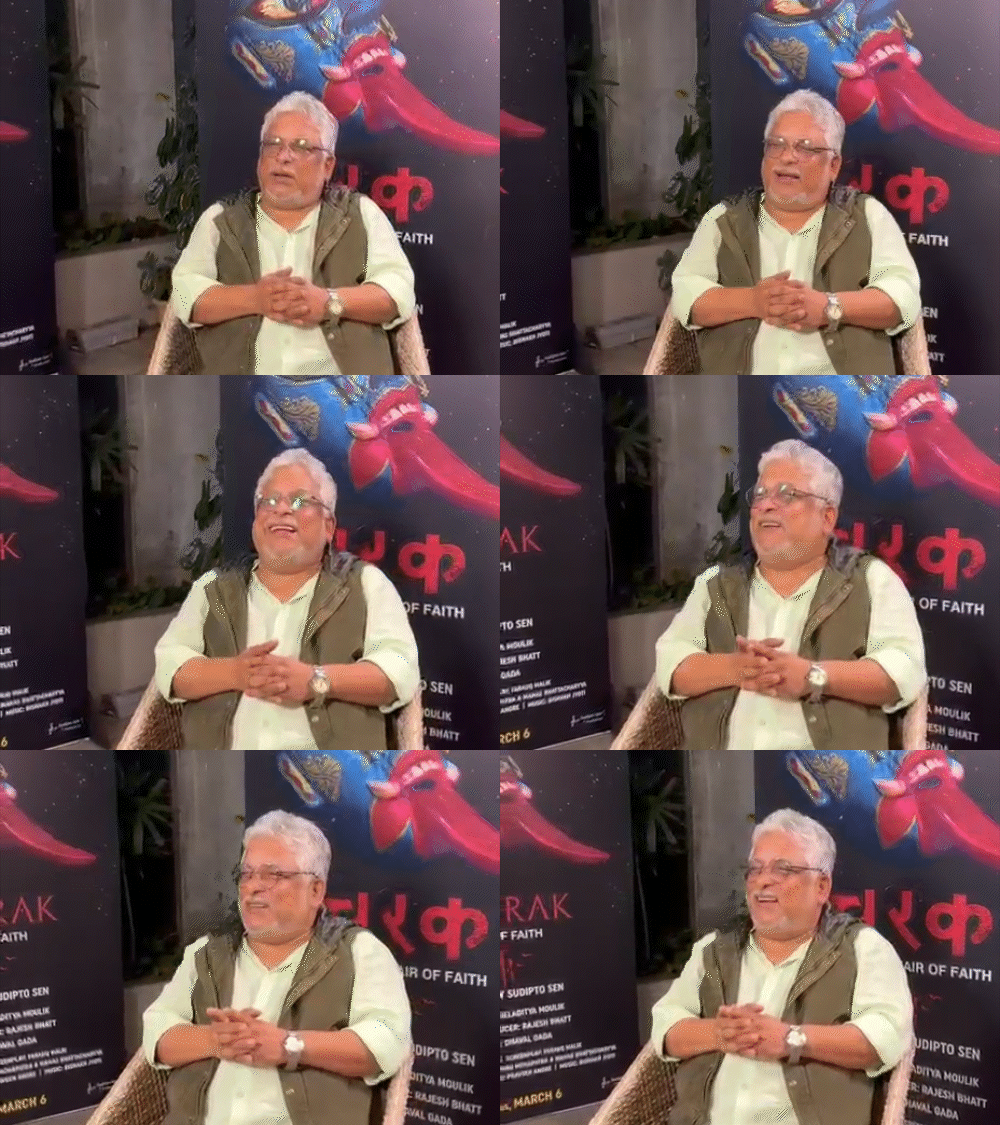
‘The Kerala Story’ director Sudipto Sen is once again in the headlines for his new film ‘Charak: Fear of Faith’. Sen, known for making films on social and sensitive issues, is presenting the conflict of faith and superstition on the big screen this time. ‘Charak’ is not just a historical celebratory story, but an attempt to show the complex relationship between tradition, logic, society and superstition. Sudipto has openly shared his views about the film’s research process, controversies, censor board issues, criticisms and the voices raised against him. While talking to Dainik Bhaskar, Sudipto said that for him cinema is not only entertainment but also a medium to ask questions to the society and spread awareness. After ‘The Kerala Story’ you are again coming up with a film on a social issue. Tell us about ‘Charak Fair of Faith’. How much research has been done? ‘Charak’ is not a new tradition. Historical documents show that this festival has been celebrated for more than a thousand years in Eastern India, Bengal, Bihar, Assam, Odisha and Jharkhand as well as in some parts of South India. This festival is organized on a large scale during the month of Chaitra (approximately 15 March to 15 May). Just like Durga Puja is popular in West Bengal, similarly ‘Charak’ is also very popular. It is associated with the worship of Mother Kali and Lord Shiva. There is a popular belief that during this time, Gods and Goddesses come to earth and reside among the devotees. In childhood, we used to wait for this fair by saving our pocket money. Thousands of folk songs and cultural programs are associated with it. But there is another side to this festival, the Tantric practices and Aghori practices. In some places in history there have been practices that are now banned by law. Our film puts this ‘faith’ i.e. the line between faith and superstition into question. Your films often get embroiled in controversies. Do you think people are afraid of the truth? In our society, we use science, logic and education as per our convenience. Where we see benefit, we adopt logic, and where tradition conflicts, we remain silent. Let me give an example. In many homes, girls are advised not to go out with open hair at night or not to wear clothes of certain colors. These things have no scientific basis, but they have been going on for generations. But problems start when superstition turns into violence. For example, the thought of sacrificing an innocent child if a couple does not have children is horrifying. An incident in Hathras shocked me, where a child was allegedly sacrificed in the name of improving school results. Unless society questions these incidents, how will change come? The release date of ‘The Kerala Story 2’ has been postponed. You have been an important part of this project. How do you see this? Disagreement is natural in democracy. You can disagree, criticize, debate about a film. But stopping art is not the solution. For me, the job of art is to bring out the truth that is being suppressed. Governments will come and go, political parties will change, but society and future generations will remain here. Therefore, it is the responsibility of the artist to express his views honestly. You will not be seen as a director in ‘The Kerala Story 2’. Many kinds of speculations are being made regarding this. Were there any differences of opinion with the production team? There is no such dispute. Initially I was supposed to direct, but the scope of the story was expanded beyond Kerala. My research was mainly based on Kerala and I worked on it for about ten years. I can’t make a film based on newspaper news or social media forwards. Whatever subject I touch, I study it deeply. So I decided to move on. After ‘The Kerala Story’ and ‘Bastar’ you also received threats. Have you ever felt scared? To be honest, yes, I was scared in the beginning. After ‘The Kerala Story’ and especially during ‘Bastar’, there was a regular “rate card” going on in my name. Someone said, so much for gouging out an eye, so much for cutting off a hand. All this was spread on social media. I felt scared for a day or two, but then I felt that if I get scared then I should stop making the film. I am not ready to believe that a film can achieve such huge success only on the basis of propaganda. If the audience connects, it is because of the story, the intention. Many filmmakers have also reacted to Part 2 of the film ‘The Kerala Story’. Anurag Kashyap called it ‘nonsense’, while Prakash Raj also called the film useless. How do you view these criticisms? See, the biggest beauty of democracy is that every person has the right to express his opinion. If Anurag Kashyap or Prakash Raj did not like my film, they have complete freedom to say so. I respect their rights. But I believe that no film should be judged on the basis of trailer or hearsay. If you disagree after watching the entire film, criticize and debate openly. Our Constitution gives us the right to question and argue. You write on social media, write articles, discuss, I have no objection. But demanding to stop or ban a film is not a right tradition. If you find the film bad then tell the audience not to watch it. But stopping art is not the solution. Art is like a river, it cannot be dammed. During the research of ‘Charak’, did any such incident come to light which shook you to the core? Read many documents, FIR and statements of eyewitnesses. Some videos and pictures were so horrific that it was difficult to even watch them. Then I realized that this is not just history, it is the truth present in some parts of the society even today. As a rational citizen we have to decide whether we stand with superstition or with conscience. This film asks the same question to the audience. Your previous film has earned more than Rs 300 crore. What are the expectations from ‘Charak’? For me, box office numbers are not the ultimate goal. If Rs 300 crore means that 2.5-3 crore people go to the theater and watch the film, then that is my real success. ‘Charak’ is a story relatable to every section of the audience, be it an urban girl from Mumbai or a village girl in UP-Bihar. We have made it in simple cinematic language. There is music, colour, festive atmosphere, but there is also a deeper question. If the audience looks within themselves and thinks after watching the film, then that will be my victory.
Source link