

Appointment of priests by govt boards can’t be a secular act: Centre | India News
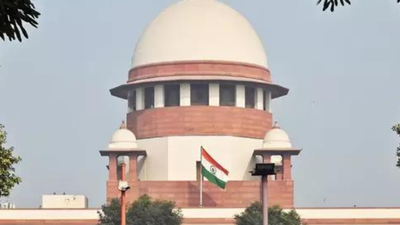
New Delhi: The Center on Wednesday launched a veiled attack on a Tamil Nadu law that axed regulation of appointment of ‘archkads (priests)’ in temples, saying the Supreme Court had in the past wrongly classified the appointment of ‘archkads’ as a “secular law” when it was purely a religious decision.Solicitor General Tushar Mehta made a strong pitch for a review of the jurisprudence developed by the SC over the past few decades, without considering the complexity of issues related to religion, faith and belief and being unduly influenced by Western jurisprudence, where individual liberty has trumped social conscience and morality. His pitch, consistent with the Modi government’s stand on the scope of judiciary intervention in faith-related issues, also took on an extra dimension due to the timing – it came ahead of TN’s assembly elections. Mehta said that by upholding the TN Act, which took control of the appointment of ‘archkads’ and vested it in government boards, the SC allowed the state to interfere in the religious affairs of a community or community by maintaining their religious traditions in their temples.
Courts must not be harbingers of reforms that undermine fundamental faith and belief: SC
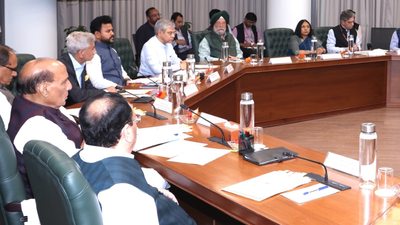
“If such a law is given the Supreme Court’s imprimatur, Shankaracharya can also be removed,” he said.A nine-judge bench headed by Chief Justice Surya Kant said, “This does not mean that ‘archanas’ will be above the law and not liable for their misconduct.”Mehta responded by saying that as long as the appointment of ‘archakas’ by community temples does not violate constitutional norms prohibiting caste discrimination, it should be the community’s right to appoint individuals as ‘archkas’, provided they meet the eligibility criteria of knowledge in ‘Agama’ and rituals.“Secularism really means non-interference of the state in the religious affairs of different communities. Removal or appointment must conform to qualifications and experience that have evolved over the centuries,” he added.Objecting to secularism and constitutional morality — both incompatible with matters of religion, faith and belief — interfering in the name of reforms by the courts, Mehta said social and religious reforms should be left to the legislature.The bench initially agreed that the SC must not be a harbinger of social reform or reform of religion which undermines the core beliefs and faith of devotees. The bench said, “Religion cannot be harmed in the name of reforms.“Who constitutes a community to determine what competence the judges, who are legal scholars, have in religious matters? The shrines of Khwaja Moinuddin Chisti and Nizamuddin Auliya and Shirdi Saibaba are visited by devotees of all sects, communities and religions. Can the court decide which temple belongs to which religion?” Mehta pressed.SG asked if Aurobindo’s followers consider themselves a distinct religious group, can SC say they are not? When Justices BV Nagarathna and Jayamalya Bagchi questioned his view, Mehta said that if followers see Aurobindo as God, then can anyone else dispute that he has a right to freedom of conscience under the Constitution.When Justice Bagchi said that Aurobindo’s idol is not worshipped, Mehta said that even Arya Samaj and Brahmo Samaj have no idol worship, yet they are considered as separate religious communities. Justice Bagchi interestingly noted that while Auroville is not considered a religious community by the SC, it has recognized Anand Margis as one.