

‘People’s will through lawmakers can bring religious reforms’: Supreme Court | India News
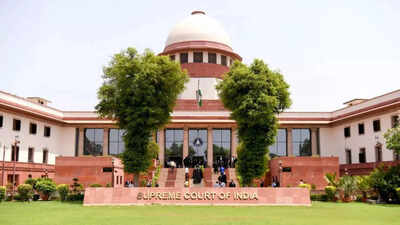
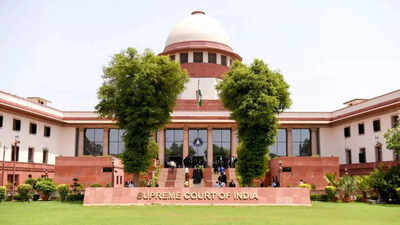
New Delhi: A nine-judge SC bench headed by CJI Surya Kant on Tuesday cautioned constitutional courts against making changes in religious practices and customs and said only the will of the people, reflected through their representatives in Parliament and the Legislative Assembly, can bring about reforms.The bench, which is hearing the sensitive faith versus fundamental rights debate, said, “Constitutional courts should be extremely reluctant to give their opinion on religious matters.”On the 14th day of the debate on Tuesday, the CJI said, “If the people of the country, through their elected representatives, seek social reforms to change certain religious practices and the Parliament or an Assembly enacts a law to that effect, the Constitutional Courts will accept it.”“If such a law is enacted and people petition the Constitutional Court that the government is interfering with religion under the guise of bringing about social reform or regulating or restricting any economic, financial, political or other secular activities related to religious practice, the court will examine the validity of such law.”
CJI: It is impossible to check all religious practices
These observations came from a bench of CJI Kant and Justices BV Nagarathna, MM Sundaresh, Ahsanuddin Amanullah, Arvind Kumar, AG Masih, PB Varale, R Mahadevan and Jayamalya Bagchi, while senior advocate Jaideep Gupta was presenting the stand for the Kerala government, which was based on religious practices. Ayyappa Temple which prohibits entry to women aged 10-50 years.CJI Kant said that it is impossible for the Constitutional Court to examine the legality of the riddle of religious practices in thousands of temples and shrines of other religions, which follow peculiar customs and rituals relating to men and women.Gupta said that if the validity of a religious practice is challenged before the SC or High Court, it becomes imperative for the court concerned to determine whether the practice is an essential religious practice. “In determining the essentiality of the practice of a religion, the court must examine it against the principles of the religion concerned and not against judicial or constitutional criteria,” he said.While Gupta said that abolishing the practice of hereditary appointment of ‘archkads’ was a necessary social reform, Justices Nagarathna and Kumar said that the process of appointing ‘archkads’ may be a secular activity associated with a religious institution but the qualification of ‘archkads’ is purely religious. Arguments are likely to end on Wednesday.