Allahabad HC: No unilateral right over public land for religious gatherings | India News
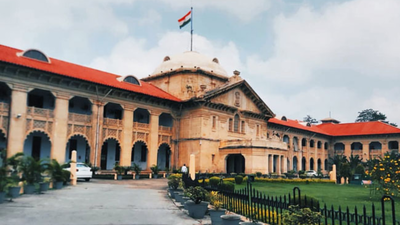
New Delhi: The Allahabad High Court has ruled that public land cannot be claimed for exclusive religious use by any individual or group, saying such activities, including prayers, must be subject to public order and the rights of others.A division bench of Justice Saral Srivastava and Justice Garima Prasad made this observation while dismissing a petition filed by Asin, a resident of Ikauna under Gunnaur tehsil of Sambhal district, who sought relief in respect of land use for prayers.The court clarified that “public land cannot be unilaterally used by any single party for religious purposes,” adding that all persons have equal rights over such property and its exclusive use is not legally permissible, reports ANI.Reiterating the broader legal position, the bench said that “the right to practice religion is subject to public order” and cannot be exercised in a way that infringes on the rights of others. It also notes that religious freedom is not absolute and is subject to the rights of others.Citing earlier judgments including Munazir Khan v. State of Uttar Pradesh and other cases, the court noted that while bona fide religious practices on private premises are protected and cannot be subjected to arbitrary interference, such protection does not amount to “absolute carte blanche” for organized or regular collective religious activities.The court also observed that when such activity extends beyond private boundaries and begins to affect the public domain, regulatory intervention by the state is permissible. It added, “It cannot be construed that there is a restricted right to convert private premises into unrestricted collective space for regular assembly.”
Courts have announced restrictions on prayer gatherings
While examining the present case, the bench noted that the petitioner was not seeking to protect an existing long-standing tradition but was trying to initiate regular collective gatherings involving participants from within and outside the village.The court observed that historically, prayers at the site were offered only on specific occasions such as Eid and held that any expansion beyond this limited practice would fall outside the scope of protected activity and would therefore be open to regulation.It also commented that the state has the power to intervene where activities deviate from established traditions and affect public order. The bench also held that even if the land was treated as private property, the petitioner would still not be entitled to the relief sought.In its order, the court added that if government land is illegally transferred and later used to demand organized prayer gatherings, such sale deed will be considered illegal and unsustainable in law.