
Bombay high court comes to rescue of couple with Australian citizenship three years after they adopted a baby in India | India News
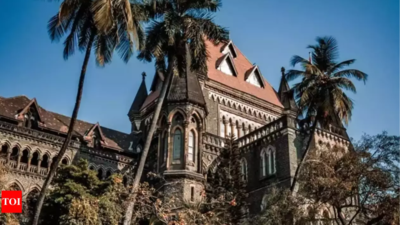
MUMBAI: The Bombay High Court has come to the rescue of a couple facing legal hurdles in taking their adopted daughter to Australia despite the adoption being valid under Indian law. The couple, both now 44, adopted a relative’s third child under the Hindu Adoption and Maintenance Act (HAMA) in April 2023. At that time, the baby was 45 days old, the wife was an Indian citizen and the husband had acquired Australian citizenship two months earlier. The wife later became an Australian citizen.However, Australian authorities do not recognize adoptions as “intercountry adoptions”, stating that children adopted outside the Hague Convention on Intercountry Adoption Procedures are not automatically adopted. This means the mother and child were stuck in India for 3 years. On March 30, Bombay High Court Justices Ravindra Ghuge and Abhay Mantri, while disposing of a petition filed by the couple seeking judicial intervention, ordered the couple to approach the District Magistrate to certify the adoption. The court invoked the 2022 rules that govern adoptions and directed that once the district magistrate issues the verification certificate within 30 days, the Central Adoption Resource Authority (CARA) must issue its no objection certificate (NOC) within 15 days. CARA compliance is crucial for intercountry adoption and then the immigration authorities in India and Australia will be notified, the HC said. Children adopted overseas in circumstances outside the Hague Convention process do not automatically have their adoptions recognized in Australia, Australian authorities told the couple, pointing to specific Australian immigration requirements relating to special visas and citizenship pathways for adopted children. The High Court said: “It is clear that the (Australian) authority needs the appropriate authority in India to verify and indicate its clearance. That authority is CARA.” The mother wrote to CARA in August 2025 that Australian Home Affairs had emailed her. CARA, in turn, held that since the adoptive father was an Australian citizen with Overseas Citizen of India (OCI) status, Section 68 of the Adoption Regulations, 2022 (HAMA Intercountry Adoption Rules) applied. A CARA reply before the High Court said that they cannot regularize any aspect of a couple’s adoption unless they comply with the requirements under the 2022 rules for transferring a child adopted abroad under HAMA. Anil Anturkar, senior counsel appearing for the adoptive parents, said it was not a case of inter-country adoption and questioned the objections raised by CARA. He said Regulation 69 of the Adoption Regulations, which deals with concluded HAMA adoptions, would apply to the couple. It was an “expatriate adoption”, Australian authorities said. “There is no provision in the Juvenile Justice Act or the Adoption Regulations 2022, which defines expatriate adoption,” the high court said, but noted that the adoption was valid under Hama. After hearing advocate YR Mishra for the Centre, the High Court said that on the pleadings, proceedings under Section 69 would be initiated. “Regulation 69 lays down the procedure for adoption and takes into account cases of an adopting party already concluded under HAMA. This regulation has to be read as applicable to the case,” the high court said, citing earlier SC judgments. The court said: “Ideally the petitioners should have followed Regulation 68 (Procedure of Inter-country Adoption).” But the process cannot be reversed now, the high court said, adding that it has to consider “the future of the adopted child as well”. The High Court judgment, made available late on Thursday, also noted that the mother, earlier twice, had filed “misadvised” petitions which got her nowhere. The High Court said, “If the child is not allowed to be taken into Australia for technical reasons, the adoption will fail.Justice Ghuge, who wrote the judgment, observed the dedication of adoptive parents. The case “navigated through complex laws, to bless the adopted child with the love and care of the adoptive parents”, the high court said, “sincerity and purity of feelings of the adoptive parents.”