
‘To be or not to be’: Why Supreme Court allowed passive euthanasia for the first time | India News
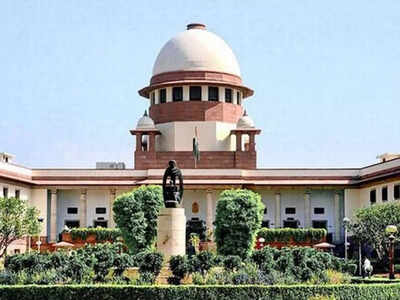
New Delhi: The Supreme Court on Wednesday quoted from William Shakespeare’s “Hamlet” as it approved passive euthanasia for 31-year-old Harish Rana, who had been in a vegetative state since August 2013 after falling from a building in Chandigarh.Also read: Supreme Court allows withdrawal of life support in Harish Rana’s passive euthanasia case The judgment by a bench of Justices JB Pardiwala and KV Viswanathan allowed passive euthanasia for the first time in India. Justice Pardiwala noted that Shakespeare’s famous line, “To be or not to be'” is now used judicially to explain the right to die.Justice Pardiwala noted at the beginning of the judgment, “The famous literary Shakespeare’s quote ‘to be or not to be’ is now used judicially to explain the ‘right to die’. The bench commended Ran’s parents for their care and resilience. “You are not giving up your son. You are letting him live with dignity,” Justice Pardiwala said while concluding the judgement. The court reasoned that, according to the medical report, continuation of Clinically Assisted Nutrition (CAN) would not be in Rana’s best interest. It directed the All India Institute of Medical Sciences (AIIMS) to facilitate the transfer of its palliative care department, to ensure a dignified withdrawal of medical aid.Also read: Who is Harish Rana? Ghaziabad man in vegetative state for 12 years at center of Supreme Court’s passive euthanasia verdictPassive euthanasia involves withdrawing life-sustaining treatment for patients in a persistent vegetative state to allow a natural death.In October 2024, the Union Health Ministry released draft “Guidelines for Withdrawal of Life Support in Terminally Ill Patients,” stating that such decisions must be based on a considered medical opinion. According to the draft, life support can be withdrawn under four conditions.According to the draft guidelines there are four conditions for revocation: a) Any person declared brainstem dead as per THOTA Act. b) Medical prognosis and considered opinion that patient’s disease state is advanced and unlikely to benefit from aggressive therapeutic intervention c) Rejection of patient/surrogate documented information, following prognostic awareness, to continue life support d) Compliance with procedure prescribed by Supreme Court. (with ANI input)