

US सुप्रीम कोर्ट ने ट्रंप के किन टैरिफ को किया खारिज? जानिए पूरा मामला – America Supreme Court Donald Trump Strikes Down Tariffs IEEPA mnrd
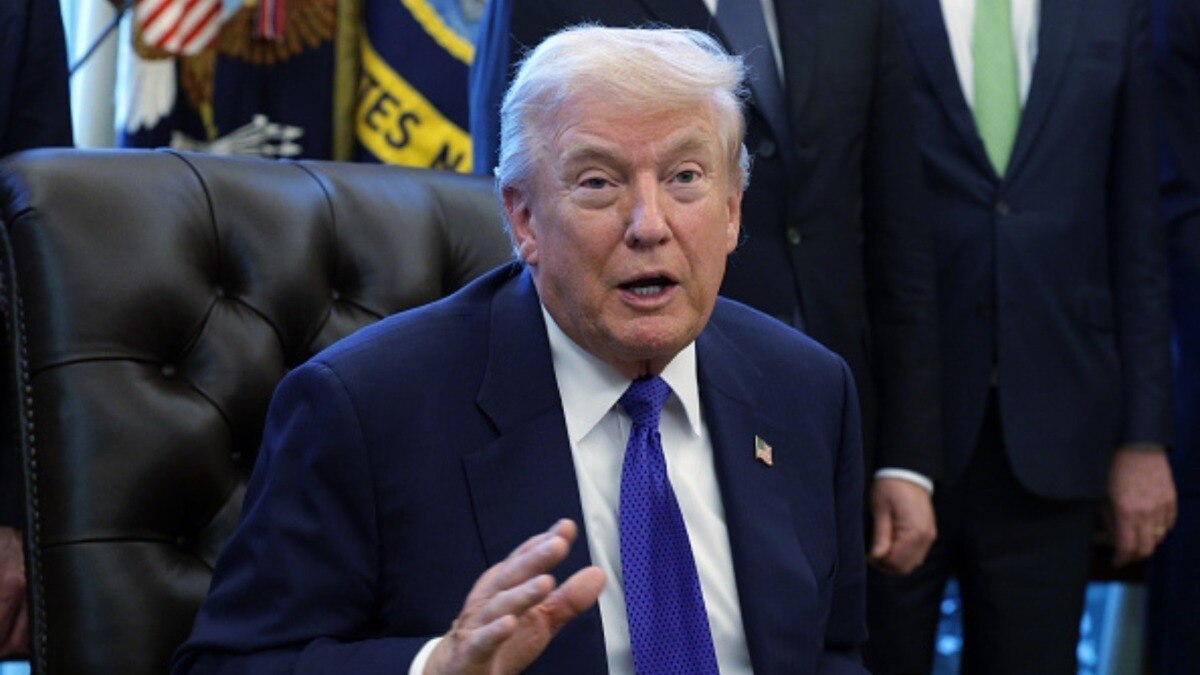
In a major blow to President Donald Trump, the US Supreme Court has rejected the tariffs imposed by him under the Emergency Act. In a 6-3 decision, the court said that Trump exceeded his authority by using the International Emergency Economic Powers Act of 1977, or IEEPA.
The IEEPA law gives the US President the power to regulate trade after declaring a national emergency, but it has never before been used to impose tariffs. Trump was the first President to use this law to impose tariffs.
Let us know which tariffs of Trump Supreme Court has rejected, and other taxes which are still in force and which will not be affected by the court order.
Ban on ‘Liberation Day’ tariff
Last year, on April 2, Trump declared ‘Liberation Day’ and imposed tariffs on almost every country in the world. ‘Reciprocal’ tariffs of up to 50 percent were imposed on dozens of countries and a 10 percent baseline tax was imposed on almost all.
Trump argued that America The situation of trade deficit is like a national emergency. However, the countries with which America had trade surplus were also taxed. Big partners like South Korea, Japan and the European Union were affected by this. After the decision of the Supreme Court, these tariffs imposed under IEEPA have now become invalid.
‘Trafficking Tariffs’ on Canada, Mexico and China
At the beginning of his second term, Trump also imposed tariffs on Mexico, Canada and China under IEEPA. He described illegal immigration and smuggling of drugs like fentanyl as a national emergency. Tariffs ranging from 25 to 35 percent were imposed on Canada and Mexico, while China had a 10 percent tariff on fentanyl-related products. These have also been affected by the decision of the Supreme Court because their basis was IEEPA.
Additional tariffs on Brazil and India
Trump had also imposed an additional 40 percent tariff on Brazil, which was linked to the ongoing lawsuit against former President Bolsonaro. At the same time, first 25 percent ‘Liberation Day’ tariff was imposed on India and then 25 percent additional duty due to Russian oil purchase, due to which the total tax reached 50 percent. However, recently a trade framework agreement was signed between America and India, after which it was said that the tariff will be reduced to 18 percent.
Also read: Trump’s big action after setback from US court… 10% tariff imposed on all countries
Will the remaining tariffs remain in effect?
Despite the Supreme Court’s decision, not all tariffs have been abolished. Steel, aluminium, auto and other sector-specific duties are still applicable as they were imposed under separate legal provisions. Trump has indicated that he may resort to other legal options to impose new tariffs, including a new 10 percent tax globally.
—- End —-