

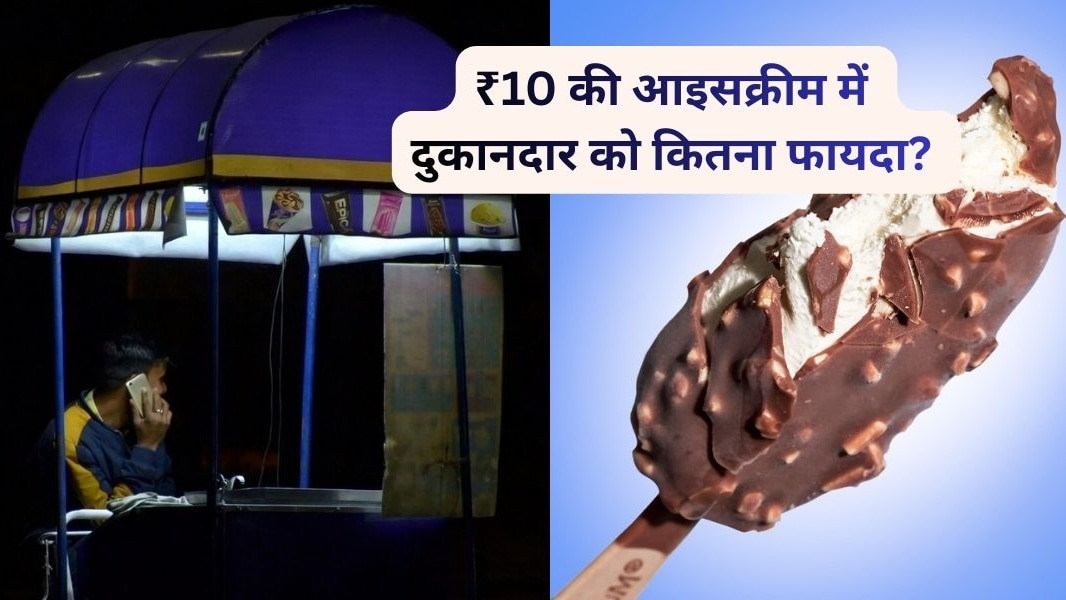
10 रुपये की चोकोबार ठेले वाले भैया को कितने की मिलती है? – 10 rupaye ki chocobar thele wale ko kitne me milti hai rttw
As soon as the summer season starts, there is a big change in the eating habits of the people. As the temperature increases, the demand for things that cool the body also increases. To get relief from the scorching sun and hot winds, people eat and drink more cold things. As soon as summer arrives, the consumption of things like curd, cold drinks and ice cream suddenly increases. The most liked thing is ice cream. In summer, ice cream is not just a food item, but also becomes a source of relief. Be it chocolate, vanilla or any other flavor – everyone enjoys it as per their choice.
The special thing is that these things are not limited to people of just one age. Children are the biggest lovers of ice cream and cold drinks, but elders and elders also like them equally to get relief from the heat. But do you know how much the ice cream seller gets for a Rs 10 chocobar? Let us know the complete accounts. Let us tell you how much a cart seller gets a chocolate bar (ice cream) worth Rs 10. This question comes to the mind of many people. The company, city, supply chain and profit margin are all included in the rate of any product.
First of all know what is MRP?
The price you pay (say ₹ 10), is called MRP (Maximum Retail Price). This includes the company’s expenses (production + packaging), transportation expenses, distributor’s and retailer’s margin. That means ₹10 is not the full income of the cart seller.
So how much does the cart seller get it for?
Generally the rate of ₹10 Chocobar is something like this. The distributor gets a ₹10 chocobar from the company for ₹6-7. The distributor gives ₹10 worth of choco bars to street vendors for ₹7–8. That means it costs around ₹ 7-₹ 8 to the cart seller.
What will be the profit of the cart seller?
If he sells it for ₹10 and bought it for ₹7-₹8, then he will save 2-3 rupees on one ice cream.
real expenses that are not visible
The full income of a street vendor is not just ₹2-₹3, because he has to bear other expenses also. Like- cost of ice/freezer, ice or battery freezer is required to keep the ice cream cold.
electricity or battery
Some people use battery operated freezer. Along with the advantages, there are also many disadvantages in this business. If the ice cream melts, it often causes a lot of damage. After daily expenses, cart, rent, hard work, the real savings become even less.
One day earning estimate
Suppose a street vendor sells 100 choco bars daily, then the earning per piece will be ₹ 2. Total earning will be ₹200. Now out of this ice/expense is ₹50–₹80. So the savings will be around ₹120-₹150 per day. Suppose you bought ice cream worth ₹ 10, out of which ₹ 7-₹ 8 went to the company and supplies, ₹ 2-₹ 3 went to the street vendor and with the same ₹ 2-₹ 3 he has to meet his entire day’s expenses. So according to this, a choco bar worth ₹ 10 is available to the street vendor for approximately ₹ 7-₹ 8. Profit per piece is ₹2-₹3. The real savings become less after taking out the expenses. So the next time you buy a ₹10 chocobar, understand that the street vendor’s income is not very high – he earns it through hard work.
—- End —-