


गोल्डन फ्रॉग: 2009 में खत्म हो गई थी प्रजाति, अब वापस बचाया जा रहा पनामा का राष्ट्रीय प्रतीक – Panama golden frog conservation
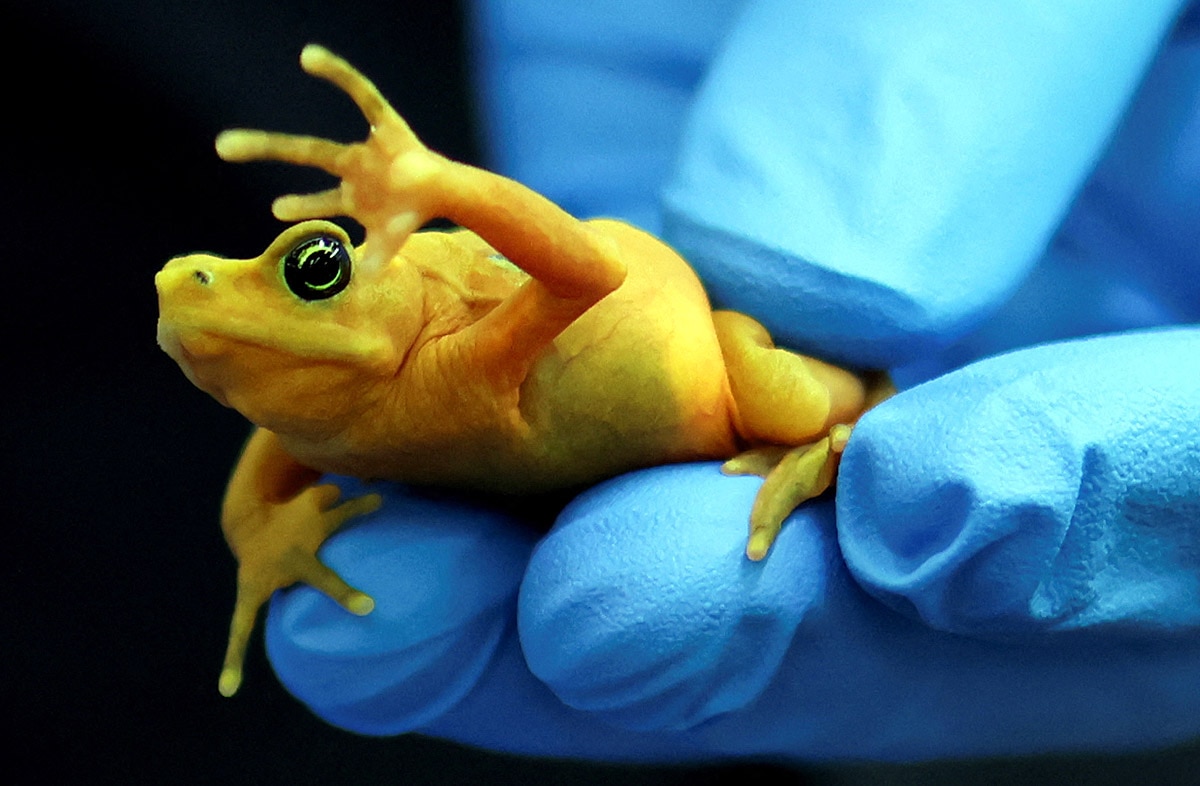
Preparations are underway to save the Golden Frog of Panama. So that its species can be saved from extinction. Roberto Ibáñez Gamboa, director of the Panama Amphibian Rescue and Conservation Project, shows off a beautiful golden frog at the Amphibian Research and Conservation Center. Its scientific name is Atelopus jetecki.
it panama It is considered the national symbol of India but today this species is on the verge of extinction. Gamboa Center is working day and night to save this frog and other endangered frogs. Scientist Roberto Ibanez has been running this project for many years. Now preparations are being made to release these frogs born in captivity back into the wild.
The Panamanian golden frog was found in the fast-flowing rivers of the central mountainous areas of Panama. Its body is bright yellow which looks like gold from a distance. This frog is a symbol of the culture and nature of Panama. People considered it a sign of prosperity.
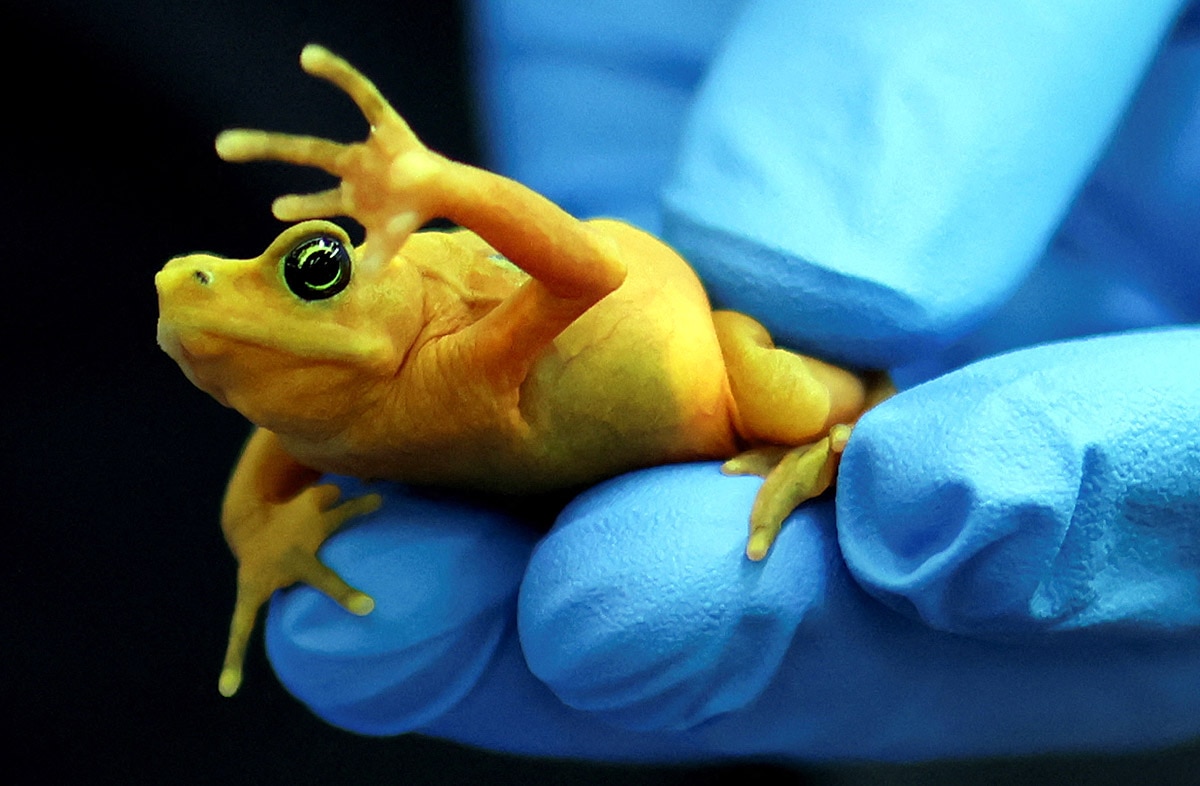
In the 1980s, a fungal disease called chytrid fungus spread throughout the region. This disease destroyed the frogs’ skin and they could not breathe. After 2009, it became almost impossible to see this frog in the wild. Today this species is considered extinct in the wild. There are only a few frogs left in captivity, which are safe in places like Gamboa Centre.
Roberto Ibáñez’s struggle and the Gamboa Center
Roberto Ibáñez is a renowned frog expert from Panama. He is a scientist at the Smithsonian Tropical Research Institute and head of the Panama Amphibian Rescue Project. The Gamboa Center is located at the edge of the rainforest near Panama City. 12 species of endangered frogs are being saved here.
There are about 1200 frogs in the center, out of which 1000 are golden frogs. Scientists breed these frogs here. Take care of them. Try to protect yourself from disease. Roberto Ibanez says that we are taking care of the most endangered frogs. Now a new beginning is being made to send them back to the forests.
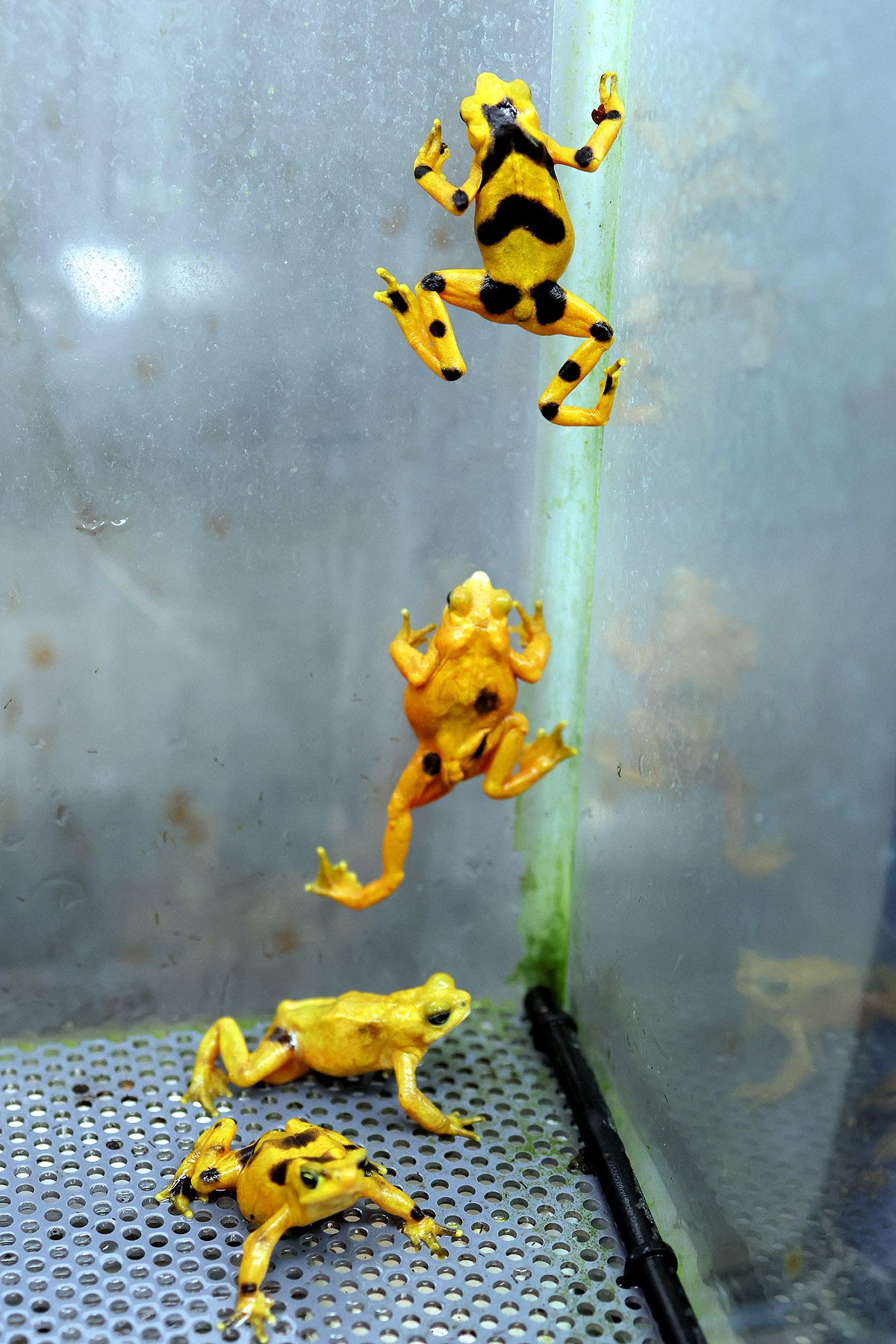
Apart from diseases like chytrid fungus, deforestation and pollution also harmed these frogs. The last wild golden frog was seen in 2009. Then scientists had already sensed the danger. The Smithsonian, Chewanee Mountain Zoo, Zoo New England, and other organizations launched the Panama Amphibian Rescue Project in 2009. Gamboa Center opened in 2015. Here frogs are bred so that their numbers increase.
Now in 2026, for the first time, golden frogs born in captivity are being released into the wild. Scientists are releasing trials to find out how much they can survive in the forests.
Also read: Now the biggest question is… Will Pakistan’s 13 thousand soldiers who reached Saudi fight with Iran?
New hope: return to the forests
In February 2026, Roberto Ibáñez and his team released captive-bred golden frogs into the rivers of their former habitat. This is the first big step. The team includes many scientists who are monitoring the frogs. After a 12-week trial, many frogs were completely freed. This will reveal what could be the strategy to prevent fungus. The Protected Area System of the Government of Panama is also supporting this campaign.
The golden frog is not just one species. It is part of the entire ecosystem. Frogs keep insects under control. Keeps the environment balanced. If they become extinct then the entire food cycle will be affected.
—- End —-